Saturday, October 15, 2011

10 Things You May NOT Know About Bhutan...


The Tiger's Nest (Paro Taktsang Monastery)
Paro, Bhutan - 2009
Named "Druk Yul" or "Land of the Thunder Dragon" by its people, the tiny Himalayan kingdom of Bhutan has been referred to in the West as the "last Shangri-La". Bhutan's former King, Jigme Singye Wangchuck, achieved fame (and much good will) as a ruler who valued his subjects' "Gross Domestic Happiness" over his country's "Gross Domestic Product".  His comments immediately spawned a world-wide debate on the economics of happiness and how it could be measured. It also fed the idealized view we have of Bhutan as an unspoiled haven, isolated from the modern world, and steeped in Buddhist spiritual values.

Rock Painting on Sacred Ledge - part of film "Travellers and Magicians"
en route between Bumthang and Thimpu, Bhutan - 2009
Punakha Dzong
Punakha, Bhutan - 2009
Bhutan is beautiful.  It is peaceful.  Its king is beloved. Bhutan is also full of contradictions, where progressive policies are superimposed on very old cultural values.  But to me, all this contributes to the country's allure. I find the place quite fascinating.

So I put together my own personal list of the 10 Things You May NOT Know About Bhutan:

1) Bhutan opened its doors to tourists in 1974. Learning from the experience of their neighbors (in particular, Nepal), Bhutan's seeks to develop "high revenue, low-impact" tourism. All tourists are required to arrange their travels through an authorized tour operator on a pre-packaged, pre-paid guided tour for which the government stipulates a minimum daily rate of $250 per person (as of 2011).

2) The Bhutanese government lifted its ban on television and the internet in 1999.

3) Bhutan has the highest original rainforest cover of any nation in the world. In addition, it is the only country in the world to be constitutionally required to maintain at least 60% of its forests for eternity.

4) Only since 2007 has Bhutan has had any autonomy in directing its own foreign policy. 
Bhutan's first monarch, King Ugyen Wangchuck, was crowned in 1907. In 1910, Bhutan and Britain entered into a treaty stipulating that in exchange for British non-interference in Bhutanese domestic matters, Bhutan would cede control of its foreign policy to the British government. When India gained its independence from Britain in 1947, this agreement continued with India directing all foreign policy. In 2007, this treaty was re-negotiated, but India and Bhutan continue to be closely tied - politically and economically.

5) Bhutan is the only country in the world where the sale of tobacco is illegal.  Plastic bags are also banned. However, the production of alcoholic products is one of its largest industries.

6) Until the 1960's, Bhutan had no roads, cars, telephones or mail service.

7) Bhutan has a population of 700,000 of which one third is under the age of 14.

8) In 2008, the first of 60,000 Bhutanese refugees arrived in the United States.  Prior to 2008, the Bhutanese community in the US was estimated at 150, living in areas surrounding Washington DC, San Francisco, Atlanta and New York City. 

Amid concern that the growing Lhotsampa ("People of the South") population (mostly ethnic Nepalese, who had for the most part retained their own religion, language and culture), would overshadow the Druk culture, the Bhutanese government enacted a series of policies in the 1980's referred to as "Bhutanization". These policies were aimed at perserving the Druk language, religion and culture. A dress code was imposed. Nepali (language) and Nepalese books were prohibited in schools. Where previously there was relatively little conflict between the groups, dissatisfaction among the Lhotsampa grew and they began to organize politically. Conflict ensued. The Bhutanese government issued new citizenship requirements and eventually tens of thousands of Lhotsampa fled the country. By 2007 there were over 100,000 Bhutanese refugees living in camps in eastern Nepal.  Unable to permanently settle in Nepal and unable to return to Bhutan, they lived in limbo. For 16 years, the governments of Nepal and Bhutan made no progress in reaching an agreement.  The two countries publicly vowed to continue talks, but in the end, welcomed third party intervention in the form of resettlement.

9) Mountain climbing is not allowed. The tallest mountain in Bhutan is Gangkhar Puensum, and it is the tallest mountain in the world that has not been summited.

10) The capital of Bhutan, Thimphu, does not have even a single traffic light. When one was put in, there were so many complaints that it was soon removed.

Punakha Dzong
Punakha, Bhutan - 2009
Chendebji Chorten
en route between Trongsa and Punaka, Bhutan - 2009
Chortens on Dorchu La Pass (10,000 feet)
between Paro and Punakha, Bhutan - 2009
For those of you curious about Bhutan, perhaps these photographs will whet your appetite to plan a visit soon. And perhaps my list of the "10 Things You May Not Know About Bhutan" will give you an inking of the complexity and contradictions inherent in any place we might be tempted to call "Shangri-La".

sources:

Thursday, October 6, 2011

The Secret to Good Travel: it's not about what you SEE, it's all about how you FEEL!

School Girls
Bhaktapur, Nepal - 2009
Preparing for a trip is fun; it's exhilarating to anticipate the thrill of being in a totally different physical environment, observing a totally different way of life. It allows us to step outside ourselves and our daily routines to gain a wider perspective on our lives and the amazing possibilities that stretch out before us. And it's that same wonderful feeling that we all work so hard to retain after our journeys are over and we are on our way home.

Trips are often scheduled around all the places we want to see - the Himalayas, the Piazza San Marco, the Potala Palace, the Uffizi Gallery, Machu Picchu. The list is endless.  However, when we head home and think back on some of the special moments we experienced, it's often the human stories unfolding before us that make the lasting impressions.

Without the crutch of language we learn to communicate with our faces and hands.  We express emotions more clearly with our bodies, without relying on words. I marvel at how universally welcoming a smile can be, how a shared laugh immediately bridges the gap between continents, and how we are all so effortlessly capable of spontaneous acts of kindness and generosity.

So this post is a tribute to all the wonderful people who have embraced me on my many trips. Rather than turn away from my camera, they've smiled into it and invited me, a total stranger, to share in that particular moment of their lives. And I seem to remember exactly where I was, and what I was thinking and feeling when I took every one of these photographs.

Proud Grandfather
Bungamati, Nepal - 2009
Pilgrims Crossing the Yarlung River to the Samye Monastery
Yarlung River Valley, Tibet - 2009
Family Outing to the Taj Mahal
Agra, India - 2007
Boy and His Bicycle
Village outside Lhasa, Tibet - 2009
Smiling Sadhu at Pashupatinath
Kathmandu, Nepal - 2007
Woman with Spindle
Zedang, Tibet - 2009
Smiling Monk in Doorway at the Temple of the Divine Madman
Wangdu, Bhutan - 2009
None of these photographs were staged, though I did ask if I could snap a photo just before I put the camera up to my eye.  Happily, they all agreed. 

Some of these photographs are included in a desk calendar titled "Himalayan Encounter", which you can find at my etsy shop: http://www.etsy.com/listing/82102104/2012-desk-calendar-himalayan-encounters. All of the images posted here are also available for purchase as 8x10 and 5x7 fine art prints and A2 size greeting cards (all printed on archival water color paper) at http://DigitalYak.etsy.com/. Be sure to send me a message if there is something you'd like that you don't see listed, or if you'd like a custom size or item, as I truly enjoy creating one of a kind items that hold special meaning. Thanks!!

Tuesday, September 27, 2011

Walking the Bay's Edge with Sandy Lydon and Gary Griggs

Who would have thought that it was actually possible to walk the length of Monterey Bay on the beach?

It's a novel idea and something that many adventurous walkers from this area have attempted on their own.  But it's also possible to combine a day (actually three days...) of fresh air and exercise with spectacular scenery, the camaraderie of a collegial group, and the expert knowledge of historian Sandy Lydon and coastal geologist/oceanographer Gary Griggs. It's called the "Bay Walk" and it has become an annual event that is truly an unforgettable experience.

Gary is fond of saying that he covers the first 200 million years of the region, while Sandy covers the last 200. Both Gary and Sandy are sought after for speaking engagements in their respective fields, as Gary has a gift for making science accessible (and inanimate rocks and drifting sand seem stimulating) while Sandy, well Sandy just makes history come alive. Together, they have a unique partnership, and it works really well.

Walking the Edge
Carmel Bay, California
The walk starts at New Brighton State Beach and ends at the Monterey Breakwater, just before Fisherman's Wharf. Over three days (three successive Saturdays) you walk an average of ten miles a day and and learn about tectonic plates, littoral drift, sea walls, Portola and the Missions of the the central coast, Japanese American abalone divers, and "By-the-Sea" developments of the 1920's.  You visit the World War II installations at old Camp McQuaide and discuss the significance of Mulligan's Hill at the Salinas River mouth.  Along the way you'll pass by the Dynergy Power Plant in Moss Landing that converts natural gas to electricity, the old Kaiser refractories where magnesium was extracted from seawater, and where Calera - "green cement for a blue planet" now runs a test facility that makes cement from sea water. Closer to Monterey, you pass by the Lapiz Sand plant - an operation that should have been shut down years ago, if only the public agencies that have jurisdiction over it could get through their own bureaucratic red tape. All in all, it's a three day experience that few of us could find on our own, even though it's right in our own backyard.

The photographs below were taken on Bay Walk 3 which took place in May 2011. While there are many opportunities to photograph signature views of the region - like the cement (concrete) ship and the sweeping panoramas of the Bay - I like to focus on the images most people overlook...close-ups of ordinary elements...unusual patterns...the juxtaposition of dissimilar objects and textures....the unexpected image that warms your heart and makes time stop.

Waves of Sand with Towers Looming Overhead
Give me Shelter
Follow the Leader
Boy and His Dog
Bounty of the Sea (with a light dusting of salt)
Rills
Skeletal Ice Plant
Message in the Sand
Sea on Sand
The air and exercise are what your body needs, the knowledge stimulates your brain, and sharing the rigors of the three day journey and its beautiful vistas with your fellow walkers is just great for your soul. You can find more information about the details of Bay Walk 3 on Sandy's website, along with many other walks that Sandy regularly schedules. Gary also wrote about the Bay Walk in two of his regular Sentinel columns last year: August 14, 2010 and August 28, 2010.

Other adventures that Sandy and Gary have undertaken together include: The Carmel Bay Hike, the North Coast Hike, the Hollister and San Andreas Hike, the 17-Mile-Drive Hike, and the Point Lobos Hike, just to name a few. I've been fortunate enough to be able to tag along on almost all of them and I could post a blog entry on each one, as they are all so memorable.  I always come away with a deeper understanding of the region and a renewed appreciation of the place I call home...and of course, hundreds of photographs.  You should try it sometime!

Several of these photographs are included in a desk calendar called The Bay's Edge, which you can find at my etsy shop: http://www.etsy.com/listing/82127349/2012-desk-calendar-the-bays-edge. All of the images posted here are also available for purchase as 8x10 and 5x7 fine art prints and A2 size greeting cards (all printed on archival water color paper) at http://DigitalYak.etsy.com/. Be sure to send me a message if there is something you'd like that you don't see listed, or if you'd like a custom size or item, as I truly enjoy creating one of a kind items that hold special meaning. Thanks!!

Tuesday, September 20, 2011

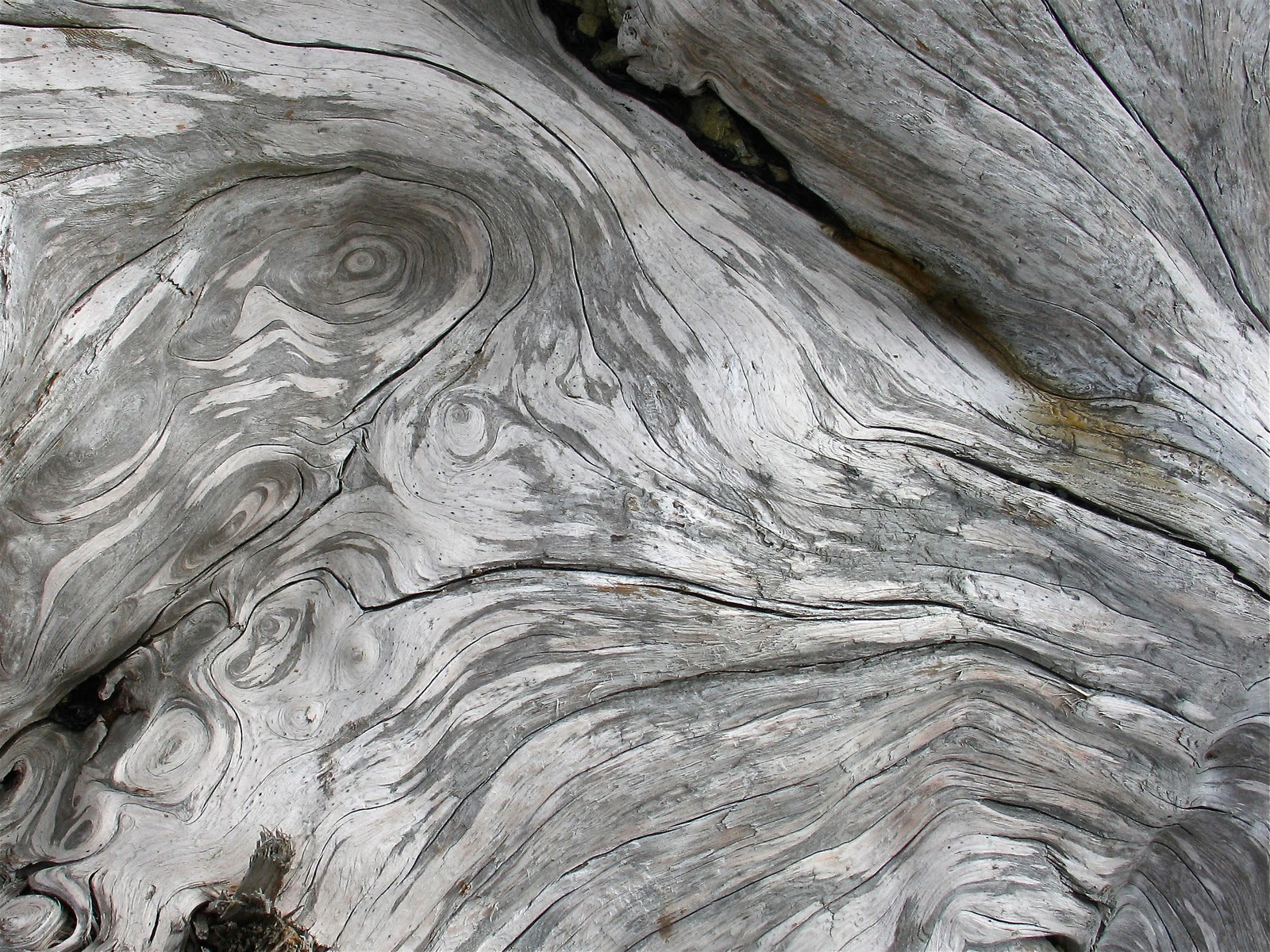
Just Drifting On By...In Praise of Weathered Wood


The beauty of wood, particularly weathered wood, was something I started truly appreciating in middle age. Perhaps because wood gets better with age.  Its color begins to fade to a seductive silver; its patterns become more defined and its textures richer.  On a misty morning by the sea, sun bleached driftwood, weathered by wind and water, takes hold of your imagination and leads you to an alternate world. 


Shifting scales, out of this alternate world and back into real time, the shore, shrouded in mist is still lovely, but just a little bit...tame.

Crescent City, California - September 2011


All of the images posted here are available for purchase as 8x10 and 5x7 fine art prints and A2 size greeting cards (all printed on archival water color paper) at http://DigitalYak.etsy.com/.  Be sure to send me a message if there is something you'd like that you don't see listed, or if you'd like a custom size or item, as I truly enjoy creating one of a kind items that hold special meaning. Thanks!!

Tuesday, September 13, 2011

A Company Town No More...


On our recent road trip up the coast of northern California, Gary and I stopped in a small town called Scotia, just south of Eureka. Until very recently, Scotia was a "company town". Founded in 1863 as Forestville, and re-named Scotia in 1888, the town was built by the Pacific Lumber Company  (PALCO) as a complete community for its employees who numbered over 1,500 in 1920.


According to Wikipedia:
"A company town is a town or city in which much of all of the real estate, buildings (both residential and commercial), utilities, hospitals, small business such as grocery stores and gas stations, and other necessities or luxuries of life within its borders are owned by a single company."
Company towns in the USA are a curious contradiction.  In a country where the concept of free will and self determination reign supreme, why were people happy to have their existence organized and subsidized by their employers? For some companies it was a an issue of practicality. Vital resources like coal and water and lumber were located in distant locales and workers needed to be housed and fed. For others, the creation of the town was a utopian vision, and many had benevolent paternalistic leaders providing workers and their families with good affordable housing, healthcare and schools.
Scotia's Cinema, beautifully rendered in first growth redwood

The town of Scotia probably fits into the benevolent utopian category. The company built and subsidized everything. Company crews came out to fix anything that broke down. They had a post office, two churches, a school, a market, a cinema, a museum and even a large country inn. And there was the ever present "company". The mill whistle called everyone to work at 7:30 am, announced lunch at noon, and the close of business at 4:30 pm. There was no poverty, no homelessness. Rents were reasonable and there were no taxes.  Life was good.

The Greek Revival Museum
Doric Columns interpreted in Redwood
Church for all on Sundays
Company housing - several different models - five color choices
The company and the town survived floods, earthquakes and the Great Depression (when many other company towns built on lumber closed down) and unlike many other lumber companies of that era who clear cut the forests, they developed a "selective cut" system of logging and a "sustainable yield" policy. Business was good and the company went public in 1975. Unfortunately it fell prey to a hostile takeover in 1988, and then filed for bankruptcy protection in 2006.

The Company, ever present, looms overhead

Bio mass power generation plant, which uses landscape clippings,
wood waste and logging slash to produce energy,
was sold to Greenleaf Power in 2010

The largest redwood mill ever constructed,
the Scotia mill gave tours of its operations to tourists. 
Today, Scotia sits on the cusp of massive change. According to Alana Semuels, reporting in the Los Angeles Times on September 2011:
"Scotia, California's last company town, has voted to become independent, according to preliminary election results released Wednesday. With 147 ballots cast — less than half of the eligible voters — 136 were to make the town an independent community services district, essentially severing the town from the New York hedge fund that owns it."
Stockpiled logs and lumber
While many changes are afoot for the residents, visitors who stop to explore still have a small window of opportunity to catch a glimpse of life as it was for resident Scotians during much of the last century. 

All of the images posted here are available for purchase as 8x10 and 5x7 fine art prints and A2 size greeting cards (all printed on archival water color paper) at http://DigitalYak.etsy.com/.  Be sure to send me a message if there is something you'd like that you don't see listed, or if you'd like a custom size or item, as I truly enjoy creating one of a kind items that hold special meaning. Thanks!!

Tuesday, September 6, 2011

Doorways....They All Have Something to Tell You...

Brown Door and Espaliered Tree
Obidos, Portugal
2011
If you are like me, you can never pass by a door without wondering what might lie beyond it, what sort of people have passed through it, or even what sort of greeting one may expect to find if you knocked on it.  Doors tell you a lot about the people who built them, the people who live behind them and the people who need to be kept from entering them.  And the symbolic role that doors play in our lives is clearly illustrated by the many ways in which doors, doorways, and elements of doors are used metaphorically:
"Education is the key to unlock the golden door of freedom"

- George Washington Carver
"When one door of happiness closes another opens; but often we look so long at the closed door that we do not see the one which has been open for us."

- Helen Keller
"The teacher who is indeed wise does not bid you to enter the house of his wisdom but rather leads you to the threshold of your mind"

- Kahlil Gibran
So here's a sample journey...around the world in eight doorways:

Starting with the place of my birth, Kathmandu, Nepal:
Richly Carved Door in the Newa Tradition
Home of the Living Goddess - Kathmandu, Nepal
2007
In the neighboring city kingdom of Bhaktapur, Nepal:
Gold Gate (Sundhoka) into the National Gallery
Bhaktapur, Nepal
2007
To the north of Nepal, in Tibet:
Zedang Doorway with Yak Skull
Zedang, Tibet
2009
To the south, in India
Doorway Layered with Time
Orcha, India
2007

Pointed Arch Door - Safdarjung's Tomb
New Delhi, India
2007
Then on to Portugal, the land of Vasco da Gama, who opened the sea route to India...
Opening in Moorish Castle Battlements
Sintra, Portugal
2011

Portel Castle Entrance Arch
Portel, Portugal
2011
 Finally to the New World, the USA, my adopted home: 
Violet Door in Lavender Wall - Capitola Venetian Hotel
Capitola, California
2006
Nothing welcomes you home after a journey around the world like your own front door...

All of the images posted here are available for purchase as 8x10 and 5x7 fine art prints and A2 size greeting cards (all printed on archival water color paper) at http://DigitalYak.etsy.com/.  Be sure to send me a message if there is something you'd like that you don't see listed, or if you'd like a custom size or item, as I truly enjoy creating one of a kind items that hold special meaning. Thanks!!